The fantasy goes something like this. You visit a small town on a weekend trip. The air is clean, the people are friendly, the pace is slower, and by Sunday afternoon you are sitting on a porch thinking about what it would be like to live here. You go home and start looking at real estate listings. The prices seem impossibly low compared to what you are paying for your city apartment. You start making plans.
The reality of moving to a smaller town is more complicated, more rewarding, and more surprising than the fantasy. It involves genuine trade-offs that are easy to romanticize from a distance. It also involves pleasures that are hard to imagine until you experience them daily. This essay is about both sides, based on conversations with people who made the move and the lessons they wish someone had told them beforehand.
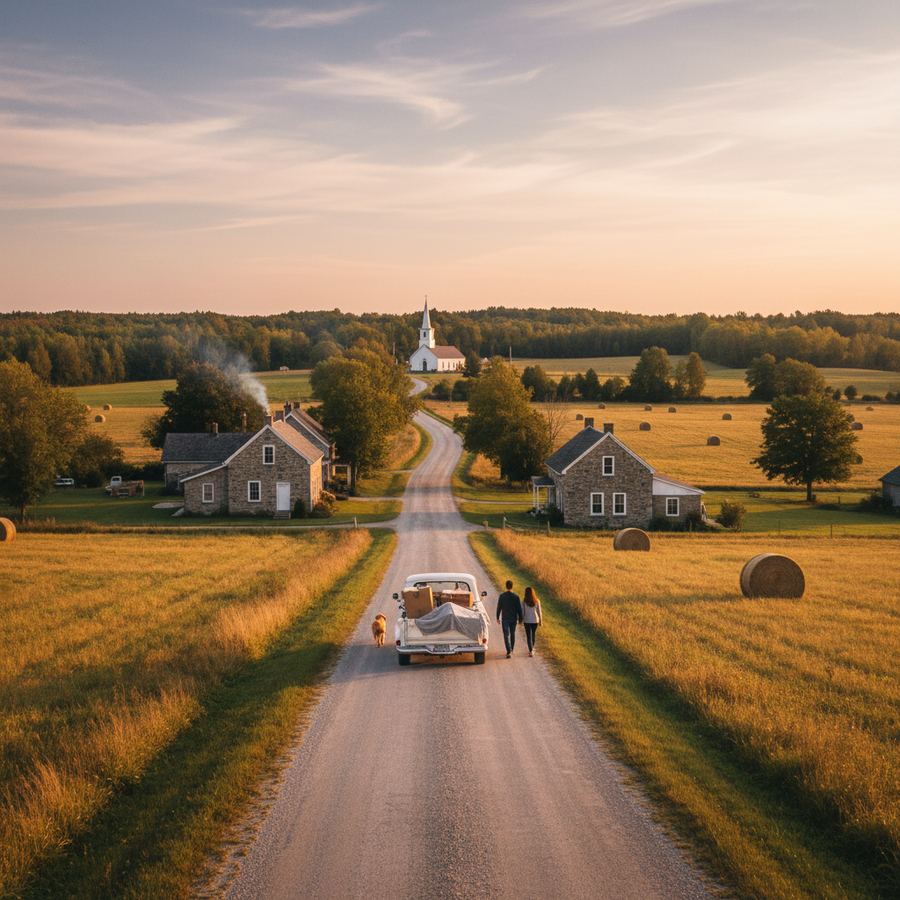
What You Gain
The gains are real and substantial. Space is the most immediate. In a small town, your money buys more house, more yard, and more distance between you and your neighbours. For families with children, this often means a yard where the kids can play unsupervised, something that felt like a fantasy in the city. For anyone who works from home, it means a dedicated office, maybe even a separate building, rather than a desk in the corner of the bedroom.
The pace of life changes quickly. Within a few weeks of moving, most people notice that they are sleeping better, driving less aggressively, and spending less money. The competitive consumption that characterizes city life, the pressure to eat at the right restaurants, wear the right clothes, maintain the right social calendar, falls away. In its place comes a simpler set of questions. Is the garden growing? Is the wood stacked? Is there bread from the bakery?
Community is the gain that surprises people most. In the city, you can live in an apartment building for years without knowing your neighbours' names. In a small town, you know them within weeks. People introduce themselves. They bring over food when you move in. They tell you which mechanic to trust and which plumber to avoid. The social fabric is denser and more immediate, and for many people, this is the most valuable change of all.
What You Lose
Convenience is the first thing to go. In the city, everything is within walking distance or a short transit ride. In a small town, you drive for everything. The grocery store is a ten-minute drive. The hospital may be thirty minutes away. If you want a specific ingredient, a particular kind of cheese, or a specialty item that your city neighbourhood had three sources for, you may need to drive to a larger town or order online.

Cultural amenities are reduced. There is no live music venue, no independent cinema, no late-night restaurant. The restaurant options are limited, sometimes to a single establishment. Entertainment is what you make of it, which can be deeply satisfying but requires a shift in expectations.
Career opportunities in a small town are narrower unless you work remotely. This is the most significant practical barrier for most people considering the move. Remote work has expanded the possibilities dramatically, but not every job can be done from a home office on a county road. For those whose work requires physical presence in an office or institution, a small-town move may mean a long commute or a career change.
The Adjustment Period
Almost everyone who moves to a small town goes through an adjustment period. The first few months are a honeymoon. Everything is new, beautiful, and exciting. Then reality sets in. The novelty fades, the quiet feels less charming and more isolating, and you start to notice the things you miss. The good coffee shop. The friend who lived two blocks away. The ability to walk somewhere interesting on a Tuesday evening.
This period is normal and temporary. It typically lasts six months to a year, and it passes more quickly if you actively engage with the community rather than waiting for the community to come to you. Join something. Volunteer at the library or the community centre. Go to the farmers market every week and become a regular. The connections you make during this adjustment period are the ones that turn a house in a small town into a home in a community.
The Social Contract
Small-town social life operates on different rules than city social life. People know your business. They see your car parked at the hardware store. They know when you had company over the weekend. Privacy, in the urban sense, is reduced. For some people, this is suffocating. For others, it is a form of belonging they never knew they needed.
The flip side of less privacy is more support. When your car breaks down, someone stops. When you are sick, a neighbour brings soup. When your kids are playing outside, the whole street is informally watching. The social contract is simpler and more reciprocal than in the city: look out for each other, show up when it matters, and do not pretend to be someone you are not.
Making the Decision
The best way to test a potential move is to spend extended time in the town before committing. Not a weekend visit, but a few weeks in a rental, during a season other than summer. January in a small Ontario town is very different from July, and if the place appeals to you in February, it will appeal to you year-round.
Talk to people who have already made the move. Their perspective is worth more than any article, including this one. Every town is different, and the experience of moving to Prince Edward County is very different from the experience of moving to Petawawa or Shelburne.
For reflections on the broader shift toward slower living, see Living Slower. For stories of people who made the transition gradually, read From Weekend Visits to Full-Time Living.