There is a way of travelling that most of us default to without thinking about it. You research a destination, make a list of things to see and do, and then spend your time there moving from one item to the next, trying to fit everything in before you have to leave. At the end of the trip you have seen a lot, but you are exhausted, and the place itself remains somehow blurry. You saw the highlights, but you never really settled in.
Slow travel is the opposite of that. It is choosing to see less and experience more. It is spending a full morning in a single coffee shop rather than visiting three cafes in three different neighbourhoods. It is walking the same stretch of waterfront twice, once in the morning and once in the evening, and noticing how different it feels. It is letting a place reveal itself at its own pace rather than trying to consume it on yours.
Small towns in Ontario are perfect for this kind of travel. They do not have enough attractions to fill a packed itinerary even if you wanted one. Instead, they offer something better: space, quiet, and the chance to notice things you would miss if you were rushing.
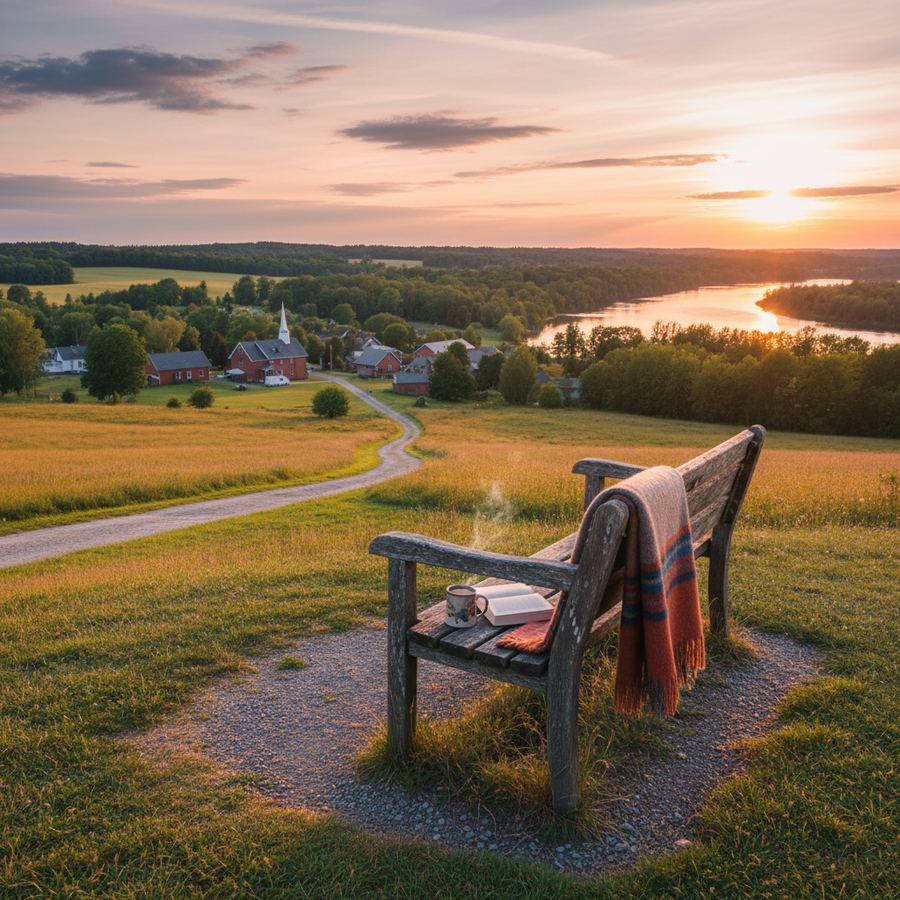
What Slow Travel Looks Like
A slow travel weekend in a small town might look something like this. You arrive on Friday evening and do almost nothing. You unpack, eat something simple, and go to sleep early because the quiet makes it easy. On Saturday, you wake up without an alarm. You walk to the nearest cafe or bakery and spend an hour there, reading, watching people, and eating something that was baked that morning.
After that, you walk. Not a hike with a destination and a distance goal, but a walk. Through the town, along the main street, down to the waterfront or the park or wherever the town opens up into something natural. You notice the architecture. You read the historical plaques. You stop when something interests you and move on when it does not.
In the afternoon, you might visit a farm stand, a winery, or a local shop. Or you might just sit on a porch and read. The point is not what you do. The point is how you do it. Without urgency. Without a checklist. Without the feeling that you are wasting time if you are not accomplishing something.
Why Small Towns Work
Small towns support slow travel in ways that cities and resort destinations do not. The scale is right. You can walk most small towns in an hour, which means you never need to drive from one thing to the next. The pace is already slow, set by residents who live here year-round and are not in any particular hurry. And there is simply less to do, which paradoxically makes the experience richer because you pay more attention to what is there.
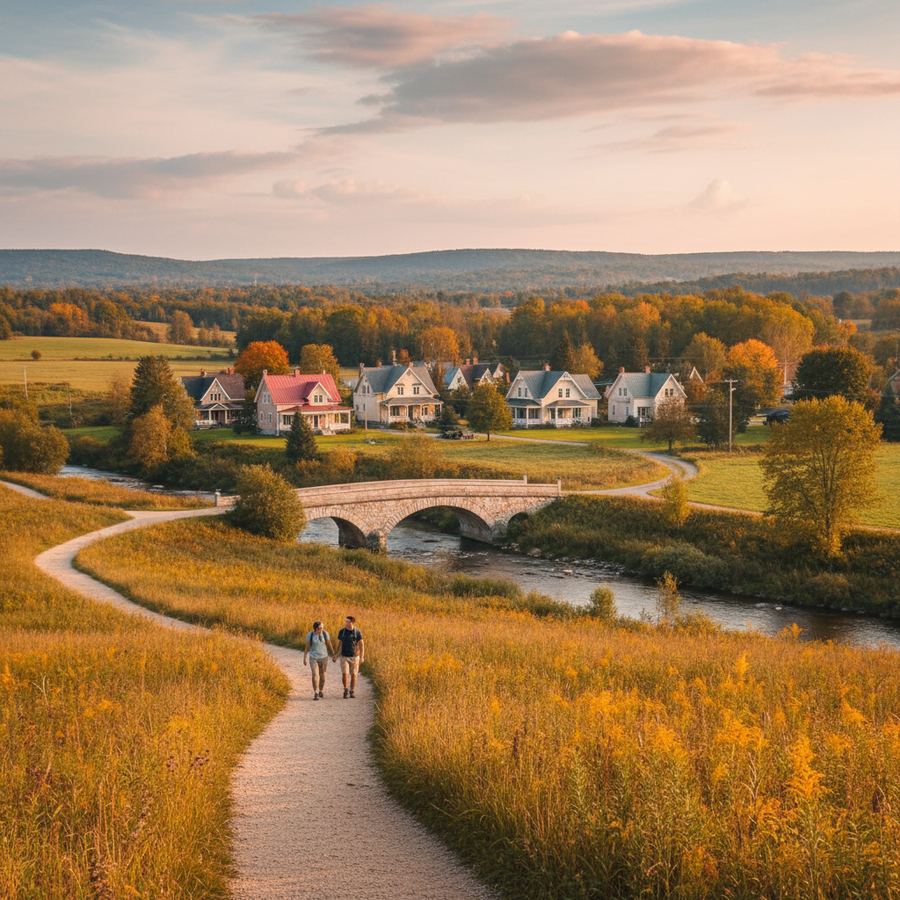
In Stayner, a slow morning on the main street followed by a drive through the countryside is a complete experience. In Prince Edward County, visiting two wineries instead of six means you actually remember them. In Shelburne, a walk through the town followed by a drive down the Hockley Valley is enough for a day that feels full without feeling packed.
The absence of tourist infrastructure in many small towns reinforces the slow approach. There are no tour buses, no timed entry tickets, no queues for attractions. You move at your own speed through a place that is operating at its own speed, and when those two speeds align, something clicks.
The Benefits You Do Not Expect
People who try slow travel often report benefits they did not anticipate. They sleep better during and after the trip. They feel genuinely rested on Sunday evening rather than needing a day to recover from their weekend. They remember specific details, the colour of the light on the water, the taste of the bread, the conversation with the shop owner, rather than a blur of check-listed experiences.
There is also a relational benefit. Slow travel gives you time with the people you are travelling with. When you are not constantly moving to the next thing, you end up talking more, sharing meals more attentively, and actually being present with each other. For families, this can be transformative. For couples, it can feel like rediscovering each other after months of parallel busyness.
How to Start
The simplest way to start practising slow travel is to cut your plan in half. Whatever you were going to do this weekend, do half of it. Visit two places instead of four. Eat at one restaurant instead of three. Spend the time you saved sitting somewhere pleasant and paying attention to where you are.
Choose a destination that supports the approach. A town with a walkable centre, a waterfront or park nearby, and at least one excellent place to eat. Prince Edward County, Stayner, and Petawawa are all excellent starting points. For trip-planning advice, see Road Trip Prep for a Weekend Getaway. For destination selection tips, check Choosing a Weekend Destination.
Leave the checklist at home. Bring a book instead. And when you find yourself sitting somewhere beautiful, doing nothing in particular, resist the urge to feel like you should be doing something else. You are doing exactly what you came to do.