There is a particular pleasure in buying food from the place where it was grown. Not from a grocery store that shipped it from another province or another country, but from a table at the end of a farm driveway, where the tomatoes were picked that morning and the person selling them can tell you exactly which field they came from. This is what farm stands and seasonal markets offer, and in small-town Ontario, they are everywhere.
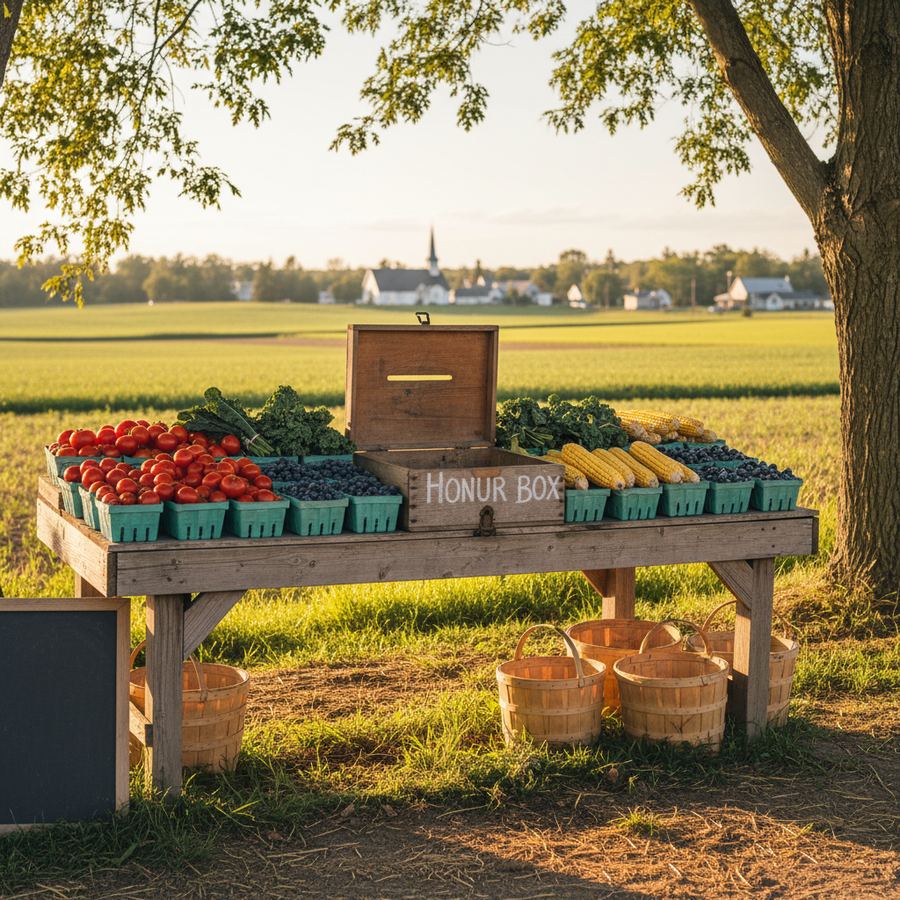
From June through October, the rural roads of the province are lined with farm stands. Some are permanent structures with refrigeration and signage. Others are a folding table, a few baskets of produce, and a hand-written sign. Many operate on the honour system: take what you want, leave your money in the box. It is a transaction built on trust, and it works because these are communities where trust is the default.
What You Will Find and When
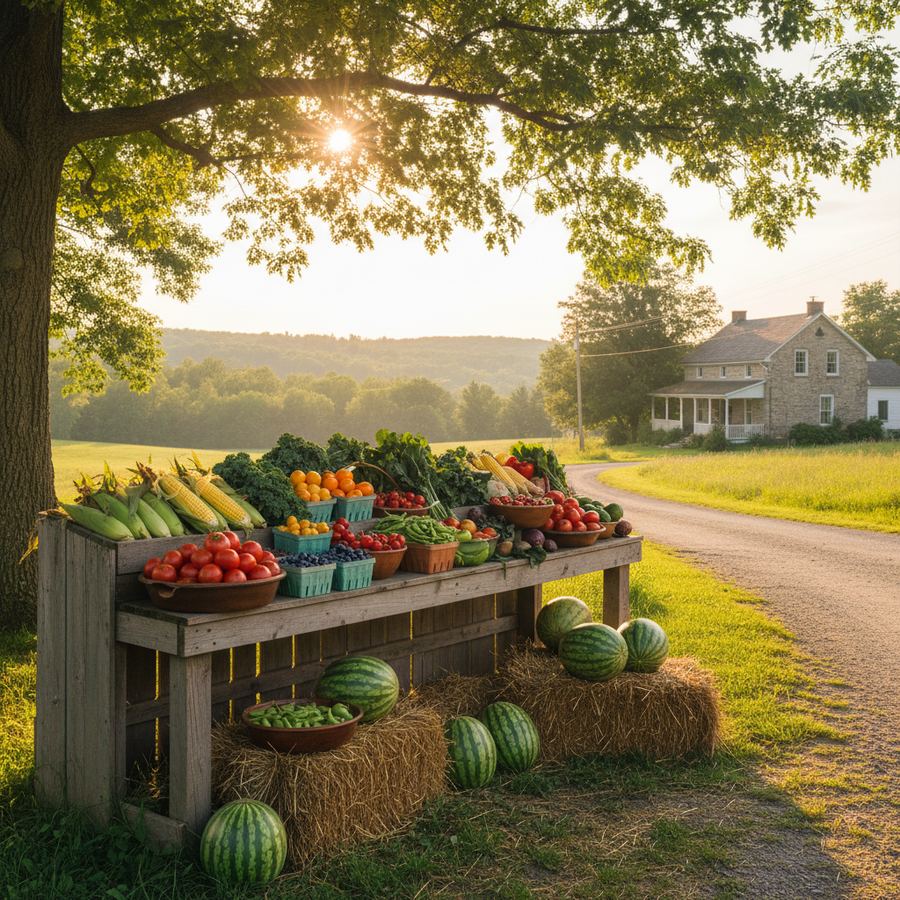
The offerings at farm stands follow the growing season with a precision that supermarket shopping has trained most of us to forget. In June, the stands begin to open with asparagus, strawberries, and early greens. July brings the first tomatoes, along with peas, beans, and sweet corn. August is the peak, with tomatoes at their best alongside peppers, cucumbers, peaches, and blueberries.
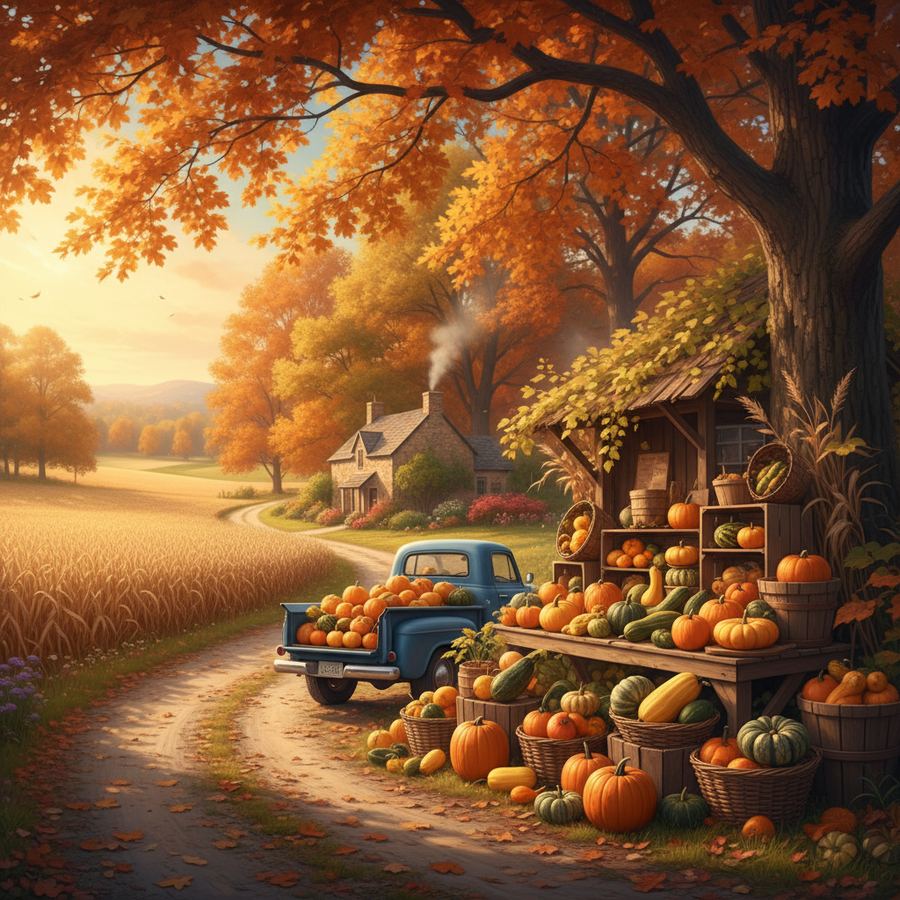
September shifts the palette. Apples arrive, along with squash, pumpkins, and late-season corn. Root vegetables, carrots, beets, potatoes, appear in larger quantities. October brings the last of the harvest, with hard squash, late apples, and the preserved goods that carry through winter: jams, pickles, honey, and maple syrup.
Year-round, some stands sell eggs, and in spring the maple syrup producers have their harvest. Each visit to a farm stand tells you exactly where you are in the agricultural calendar, and there is something grounding about that connection to seasonal rhythms.
Prince Edward County
Prince Edward County has the highest concentration of farm stands of any area we cover. The county's agricultural character and its tourism economy create a perfect environment: farmers have excellent growing conditions and a ready market of weekend visitors looking for exactly what they produce.
Drive any county road during the growing season and you will pass multiple stands. County Road 1, along the southern shore, is particularly well-stocked. The roads around Hillier and Consecon pass through prime agricultural land with stands every few kilometres. Look for hand-painted signs at the end of driveways. They are easy to miss if you are driving at highway speed, which is another reason to slow down.
The Saturday market in Picton is the County's main weekly market, running from May through October. It brings together farmers, bakers, and food producers in a single location, making it an efficient way to sample what the county offers. Arrive early for the best selection.
Clearview Township and Simcoe County
The area around Stayner is agricultural heartland, and the farm stands reflect the region's focus on field crops and mixed farming. Corn, tomatoes, squash, and root vegetables dominate, along with eggs from small-flock producers and honey from local apiaries. The stands here are less touristy than in the County, operating primarily for the local community, which means the prices are fair and the quality is consistently high.
Dufferin County
The area around Shelburne and the Hockley Valley has a scattering of farm stands and a growing presence at local markets. The Orangeville Farmers Market, about twenty minutes south of Shelburne, is one of the better weekly markets in the region, with a mix of produce, baked goods, and artisan products.
Ottawa Valley
The Petawawa area has a shorter growing season but a committed local food community. Farm stands appear along the Highway 17 corridor and the side roads leading into the valley. The produce tends toward hardier crops suited to the climate: potatoes, root vegetables, berries, and maple products. Local markets in Pembroke and surrounding communities bring producers together on weekday and weekend mornings.
Making the Most of Farm Stands
Bring cash in small denominations. Many farm stands are unmanned, and the honour boxes do not make change. A selection of five- and ten-dollar bills covers most purchases.
Bring a cooler if you are buying perishables on a warm day. A bag of ice from a gas station keeps produce fresh during the drive home and prevents wilting in a hot car.
Buy what looks good rather than shopping from a list. Farm stands reward spontaneity. If the tomatoes are perfect, buy extra and figure out what to do with them later. If you have never seen a particular variety of squash, buy one and ask the farmer how to prepare it. These unplanned purchases often produce the best meals.
For more on eating well in Ontario's small towns, see Brunch Spots in Small-Town Ontario and Where to Eat in Prince Edward County.