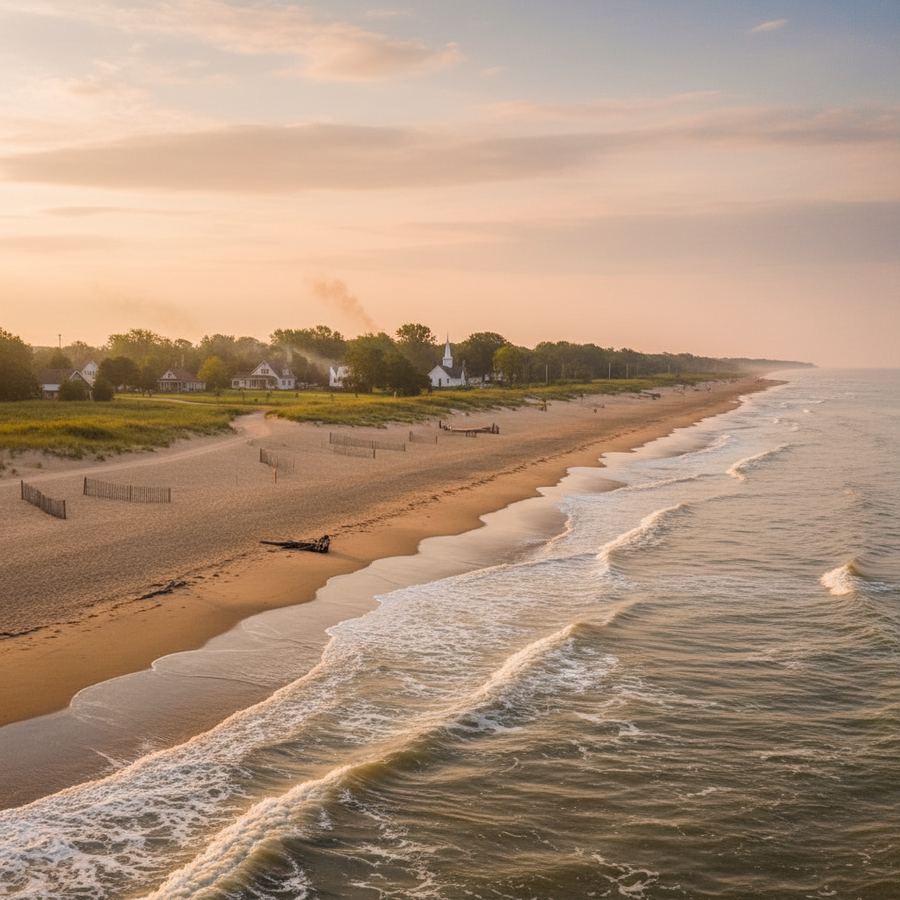
Wasaga Beach holds a record that sounds almost impossible until you see it for yourself. Fourteen kilometres of continuous sand along the southern shore of Georgian Bay, making it the longest freshwater beach in the world. On a summer weekend, the main beach areas near the town centre draw crowds, music, and the kind of energy you would expect from a popular destination. But walk ten minutes in either direction, and the scene changes completely. The sand stretches on, the noise fades, and you find yourself on a quiet beach with clear water and barely another person in sight.
That contrast defines Wasaga Beach. It is both a busy summer destination and a surprisingly peaceful place, depending on where you go and when you visit. The town itself has grown significantly over the past decade, with new residents drawn by the waterfront lifestyle and the relative affordability compared to other lakeside communities in Ontario. For visitors, it offers a weekend that can be as social or as solitary as you want it to be.
The Beach Areas
Wasaga Beach is divided into numbered beach areas, running from Beach Area 1 near the town centre to Beach Area 6 at the far eastern end. Each has a slightly different character. Beach Area 1 and 2 are the busiest, with restaurants, shops, and amusement attractions nearby. This is where most day-trippers head, and on a hot July Saturday it can feel very crowded.
Beach Areas 3, 4, and 5 are progressively quieter. By the time you reach Area 4, you have left most of the crowds behind. The sand is the same fine, pale quality, and the water is shallow enough for wading well offshore. Beach Area 6, within Wasaga Beach Provincial Park, is the most natural and least developed, backed by dunes and beach grass rather than buildings.
For families with young children, the shallow water is a genuine advantage. Georgian Bay warms up slowly in spring, but by mid-July the shallows are comfortable, and kids can wade and splash without parents worrying about depth or currents.
Beyond the Beach
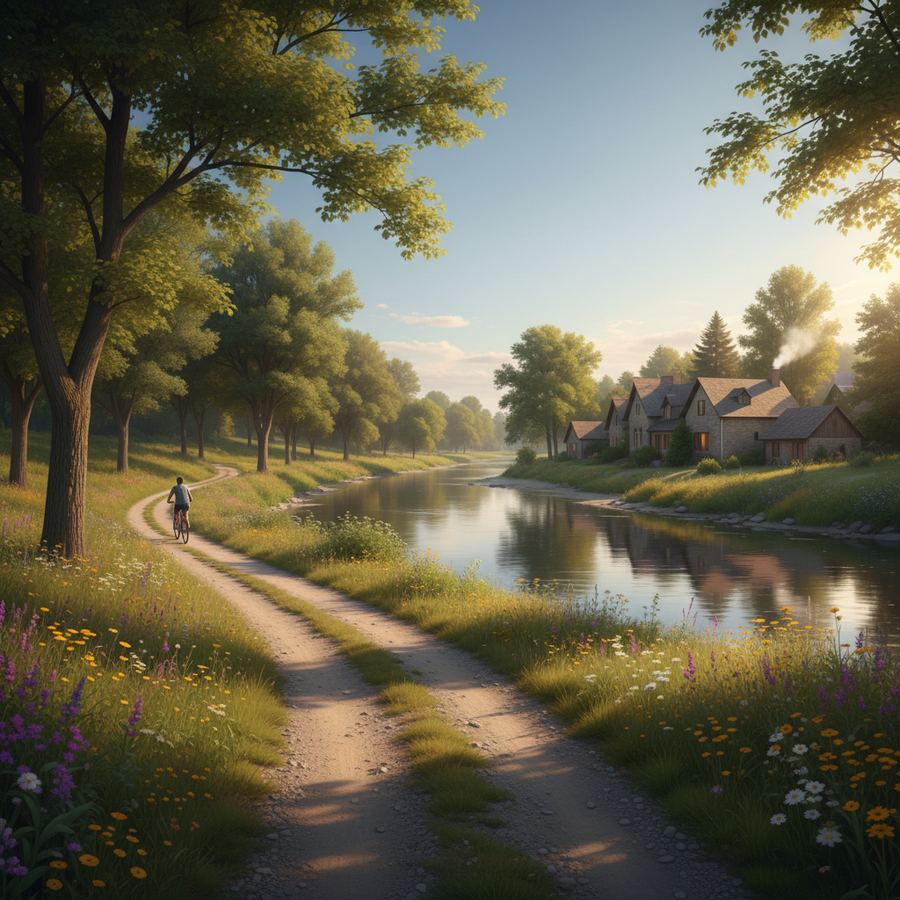
There is more to Wasaga Beach than the shoreline, though the beach understandably dominates most visits. The Nottawasaga River runs through town and offers canoeing and kayaking opportunities. The river trail, a walking and cycling path following the riverbank, is a pleasant way to spend a morning, especially in spring or autumn when the trees along the banks are at their best.
The town's main commercial strip has the usual mix of fast food and souvenir shops, but scattered among them are a few genuine finds. Local restaurants serving fresh Georgian Bay fish, ice cream shops that have been operating for decades, and a farmers market that runs through the summer months. It is not a foodie destination on the level of Prince Edward County, but there is good eating to be found if you know where to look.
The surrounding area offers more options. Collingwood, a short drive west, has a more developed dining and arts scene. The Blue Mountains, visible from the beach on clear days, offer hiking in summer and skiing in winter. And the southern Georgian Bay shoreline, stretching from Wasaga Beach toward Midland and Penetanguishene, is dotted with small communities worth exploring.
The Provincial Park
Wasaga Beach Provincial Park protects a significant stretch of the shoreline and the dune system behind it. The park's trails wind through dune forests of jack pine and red oak, passing through landscapes that feel surprisingly wild given the proximity to the town. The Blueberry Trail is a popular short hike, and in late summer the blueberries along the path are ripe for picking.
The park is also historically significant. It protects the site where the HMS Nancy, a British ship from the War of 1812, was scuttled in the Nottawasaga River. The Nancy Island Historic Site, a small museum on an island in the river, tells the story. It is a quiet, interesting stop that most beach visitors miss entirely.
When to Visit
July and August are peak season. The beach is at its warmest, the days are longest, and the town is fully alive. Weekdays are significantly less crowded than weekends, which is worth considering if your schedule allows it.
September is underrated. The water is still warm from summer, the crowds have mostly gone home, and the light takes on that golden autumn quality that makes everything look better. October brings colour to the trails and a genuine stillness to the beach.
For family-specific planning, see our Family Weekend in Wasaga Beach guide. And for a broader look at Ontario's beach options, check Best Beach Towns for a Weekend.
Getting There
Wasaga Beach is about ninety minutes north of Toronto via Highway 400 and Highway 26. The drive is straightforward, though Highway 400 can be congested on Friday afternoons in summer. Leaving early on Friday or midday Saturday avoids the worst of the traffic. From Barrie, it is about thirty minutes west on Highway 26.
A car is necessary for getting around. The town is spread along the shoreline, and while the main beach areas are walkable from the town centre, reaching the quieter beaches and surrounding attractions requires driving.